

Wechat QR code
Wechat QR code

15311826613
Click to add WeChatAmong the many methods for extracting gold from gold ore, cyanide gold extraction has become the main method of modern gold smelting due to its high efficiency and mature technology. With the advancement of science and technology and the increasing demands for environmental protection, different types of cyanide gold extraction processes are constantly developing and improving. This article will discuss in detail the processes, characteristics, and applicable scope of cyanide carbon-in-pulp gold extraction, heap leaching gold extraction, flotation concentrate cyanide gold extraction, and resin gold extraction processes, and analyze the application and advantages of these processes in actual production.
The whole-sludge cyanide carbon-pulp process is a relatively advanced gold extraction process, mainly consisting of the following five steps:
① Pre-screening the ore pulp using a 0.6mm screen;
② Adsorbing dissolved gold using activated carbon;
③ Separating gold-loaded carbon using a 0.85mm screen;
④ Desorbing gold from the gold-loaded carbon;
⑤ Recovering gold from the gold-bearing solution using electrolysis. The desorbed carbon can be regenerated and impurities removed.
The carbon-pulp process has many advantages, such as eliminating the need for solid-liquid separation, eliminating concentration filtration and zinc powder replacement operations, saving significant infrastructure costs such as plant construction and equipment purchases, and lower production costs. This gold extraction process is more suitable for processing ores that are difficult to filter and concentrate.
2. Heap Leaching for Gold Extraction
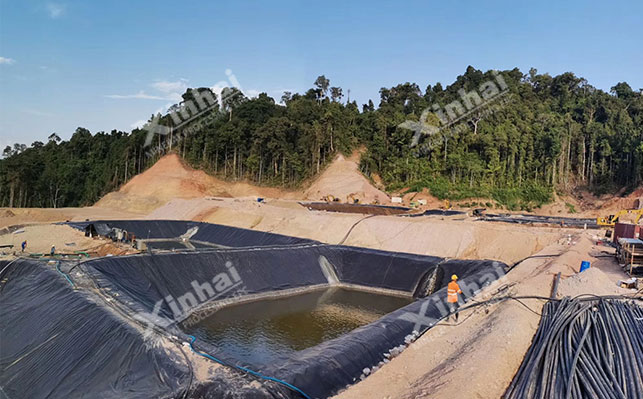
Heap leaching for gold extraction offers advantages such as a short production process, easy technology mastery, low investment, quick returns, and adaptable production scale and mechanization. It is a highly flexible gold extraction method suitable for treating ores with severe weathering and oxidation, and is particularly applicable to low-grade disseminated deposits. Industrially, two types of heap leaching are used: one involves direct leaching of the mined ore, which takes a longer time; the other involves crushing the ore before leaching, resulting in a shorter leaching cycle. Key factors affecting the leaching process include solution permeability, transportation, and recovery.
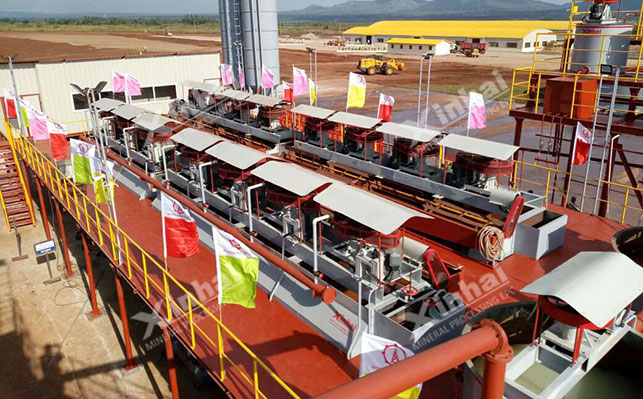
The flotation-concentrate cyanide gold extraction process is generally used to process gold-bearing sulfide primary ores with low mud content, easy flotation enrichment, and high recovery rates. The characteristics of this process are: after flotation enrichment, the gold content of the concentrate increases, reducing the amount of ore entering the cyanide gold extraction process, and also reducing cyanide consumption. This process has less environmental pollution and saves on infrastructure investment and production costs.
Compared to the carbon-in-pulp (CIP) process, the resin-in-pulp process adsorbs gold at a higher rate and has a higher saturation gold loading capacity. Furthermore, gold desorption from resin is easier than from activated carbon. Resin has higher strength than activated carbon and is less prone to wear, is not contaminated by organic matter, and does not require periodic heat treatment to restore activity, making it economically superior to activated carbon. When processing gold-bearing pyrite, organic ores, or very fine gold ores, the resin-in-pulp gold extraction process can improve the gold leaching rate.
In summary, cyanide gold extraction processes cover multiple steps from ore pretreatment to final gold recovery, each with its unique advantages and applicable conditions. In actual production, selecting a suitable gold extraction process can not only effectively improve the gold recovery rate but also reduce production costs and environmental impact. With continuous technological advancements, the cyanide gold extraction process will continue to be optimized and innovated in the future, further promoting the development of gold smelting technology. Rationally selecting the process based on ore properties and production scale will help achieve greater utilization of gold resources.
 CHAT
CHAT MESSAGE

 Consult
 Message
