

Wechat QR code
Wechat QR code

15311826613
Click to add WeChatQuartz sand is widely distributed in nature and can be widely used in glass products, casting, refractory materials, and other industrial sectors. With the continuous development of science and technology, its application scope is gradually expanding, with increasing demand in electronic materials, thin film materials, atomic energy, silicon for semiconductors, fiber optic communication cable materials, and some advanced defense technology equipment.
Therefore, strengthening the research on siliceous raw material Quartz Sand Purification Process Research on deep processing technologies is particularly important.
Therefore, strengthening research on the purification process, beneficiation process, and deep processing technology of siliceous raw material quartz sand is particularly important.
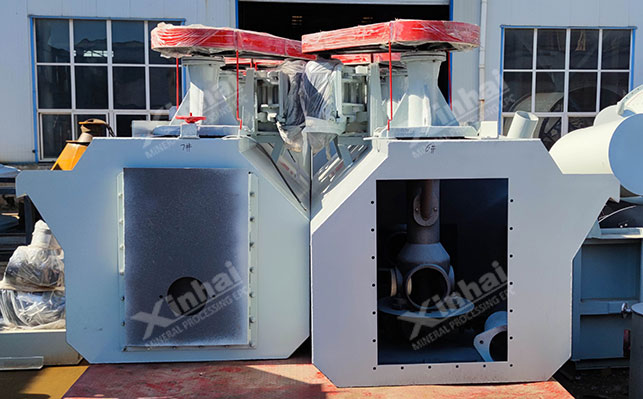
The target mineral for quartz beneficiation and purification is silicon dioxide. All other minerals are impurities. Quartz ore often contains feldspar, mica, clay, iron, and other impurity minerals. Therefore, the principle of quartz purification processes should be to maximize the silicon dioxide content in the product and minimize the content of these impurity minerals. Quartz is used in various industries with different quality requirements, resulting in varying silica and impurity contents. Therefore, the purification process for quartz sand should strive to meet the needs of these diverse industries.
The purification processes for quartz sand are mainly divided into two categories: physicochemical purification and biological purification. Commonly used quartz purification processes include crushing and grinding, screening, scrubbing, gravity separation, flotation, magnetic separation, electrostatic separation, and acid leaching. Fluid inclusions in quartz sand have a significant impact on upstream products. Therefore, in addition to effectively removing harmful minerals such as iron- and aluminum-containing minerals, the removal of these fluid inclusions should also be considered during purification.
2. Quartz Sand Washing and Classification Process
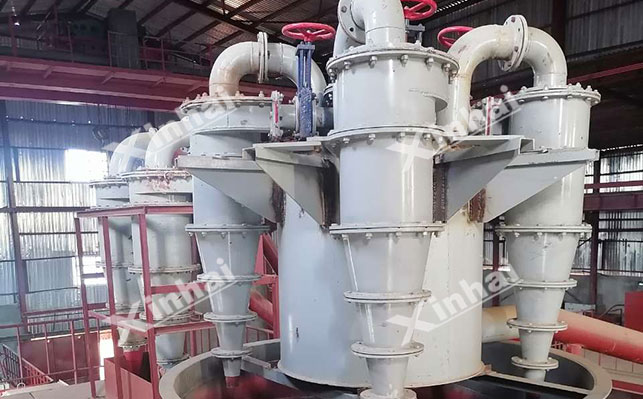
Because quartz sand contains varying degrees of slime, it needs to be washed and classified during the beneficiation process to ensure the final product meets the corresponding standards. When quartz sand contains a high amount of impurities, especially fine clay, washing and grading processes can be used to remove the clay, thereby reducing the content of impurities such as iron and aluminum in the ore. Currently, silica sand beneficiation plants use rotary drum screens, spiral washers, spiral classifiers, hydraulic classifiers, and hydrocyclones to deslim quartz sand in actual production.
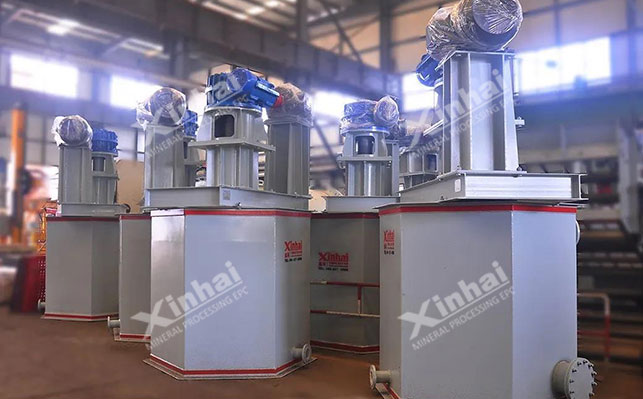
The purpose of scrubbing is to remove the thin film of oxidized iron and clayey mineral impurities adhering to the surface of quartz sand. Scrubbing utilizes external mechanical force and the collision and friction between quartz sand particles to remove impurities. Furthermore, scrubbing can break up mineral aggregates, further dissociating the minerals, which can then be further purified through grading. Two common scrubbing methods are rod mill scrubbing and mechanical scrubbing. During scrubbing, it is necessary to control the scrubbing concentration and time to avoid additional equipment energy consumption and beneficiation costs.
Gravity Separation: This mineral processing method utilizes the density difference between impurity minerals and the target mineral, quartz, and the difference in their movement directions in water or other media to remove impurity minerals. Commonly used equipment for gravity separation includes spiral concentrators, spiral sluices, and shaking tables.
Magnetic Separation: Quartz in quartz sand is a non-magnetic mineral, while impurity minerals such as feldspar, limonite, hematite, ilmenite, biotite, rutile, tourmaline, and garnet, except for feldspar, are weakly magnetic minerals, and magnetite is a strongly magnetic mineral. Magnetic separation utilizes this difference in magnetic properties to remove weakly magnetic iron impurities and strongly magnetic iron impurities in quartz sand, achieving purification and impurity reduction.
Flotation: When impurities in quartz sand are mostly contained in slime, washing, scrubbing, classification, desliming, and magnetic separation alone are insufficient to achieve ideal product specifications. Therefore, flotation is often used to further improve the purity of quartz. Flotation primarily removes disseminated or lenticular iron-containing minerals, as well as non-magnetic associated minerals such as feldspar, mica, and kaolin from quartz particles.
The above is a brief introduction to quartz sand purification technology. However, for the purification of high-purity quartz sand, using only one purification technology often fails to achieve ideal results, especially for quartz sand used in high-tech enterprises. Therefore, the purification of high-purity quartz sand often employs a combination of centralized purification technologies to achieve excellent results.
 CHAT
CHAT MESSAGE

 Consult
 Message
