

Wechat QR code
Wechat QR code

15311826613
Click to add WeChatWith the continuous development of science and technology, the processes, machinery, automation control, and production indicators of gold production have also reached a new level. Gold ore purification methods include heap leaching, flotation, gravity separation, and cyanide leaching, among which cyanide gold extraction is the main modern method. Many factors affect the gold extraction effect during the cyanide gold extraction process. The following will introduce these factors to help you better understand the cyanide gold extraction process.
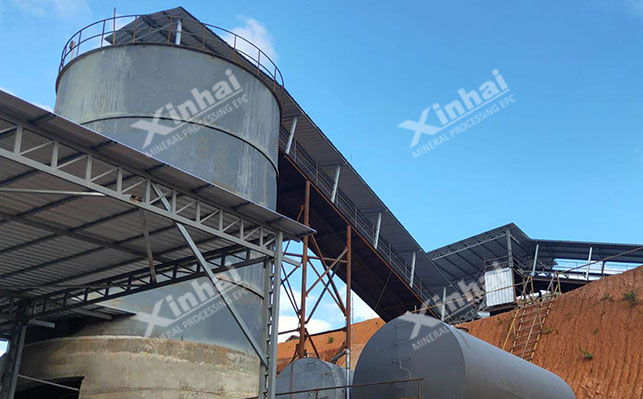
When the concentrations of cyanide and oxygen are within a reasonable and suitable range, the dissolution rate of gold in the cyanide solution will be significantly increased. The gold dissolution rate is twice the oxygen consumption rate and half the cyanide consumption rate. When the cyanide concentration in the solution is low, the gold dissolution rate depends on the cyanide concentration, while when the cyanide concentration is high, the gold dissolution rate is determined by the oxygen concentration. Therefore, reasonably controlling the cyanide and oxygen concentrations can accelerate the gold dissolution rate. If one unilaterally emphasizes aeration or adds excessive cyanide while ignoring the concentration of free cyanide in the solution, the oxygen content in the solution will be lower than the theoretical value, thus affecting the gold leaching rate and wasting aeration power and cyanide.
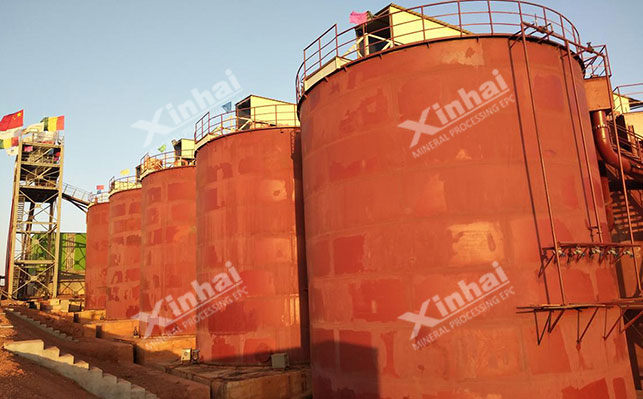
Adding an appropriate amount of alkali to cyanide is solely to ensure its stability and reduce chemical loss; therefore, this added alkali is called a protective alkali. After adding a protective alkali, the consumption of sodium cyanide in the cyanide solution can be significantly reduced. Besides preventing cyanide hydrolysis, the protective alkali can also eliminate metal ions and neutralize the acids produced by the oxidation of dissolved carbon dioxide and sulfides, preventing cyanide consumption and decomposition by acids.
The added alkali needs to be maintained at a certain concentration. If the alkalinity is too high, it will hinder gold leaching, reduce the gold dissolution rate, and promote the decomposition of certain minerals. This is particularly evident when the alkali is lime.
Excessively high slurry viscosity significantly reduces the diffusion rate of cyanide and oxygen within the slurry, thus slowing down the dissolution reaction. Because the relative flow between gold particles and the cyanide solution is hindered, high-viscosity slurry affects gold leaching efficiency, leading to a decrease in gold extraction rate. Furthermore, excessively high slurry viscosity can increase energy consumption during stirring and conveying, and even cause equipment blockage. Therefore, in cyanide gold extraction, the slurry viscosity is typically controlled by adjusting the solid-liquid ratio to ensure good flowability and reaction efficiency.
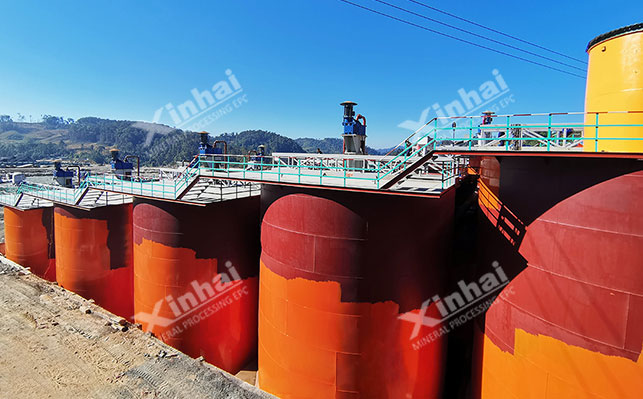
Gold usually exists in the form of native gold. Most of the associated metallic minerals can dissolve to varying degrees in cyanide solutions, thus affecting gold particle leaching. These impurities consume dissolved oxygen and free cyanide in the cyanide solution during dissolution and form various thin films on the gold particle surface, reducing the gold leaching rate.
Among numerous factors, temperature has a significant impact on gold leaching. The dissolution rate of gold increases with increasing temperature, but the solubility of oxygen decreases with increasing solution temperature, increasing the hydrolysis of other cyanides and accelerating the reaction between other non-precious metal minerals and cyanides. This leads to increased cyanide consumption. In actual production, reactions at room temperature achieve good results. Additionally, the size and shape of gold particles also affect the leaching rate. When the specific surface area of gold particles increases, the dissolution rate accelerates, and vice versa. Leaching time is also a crucial factor affecting gold extraction efficiency; as leaching time increases, the gold leaching rate also increases. When the leaching rate gradually approaches a certain limit, the appropriate addition of hydrogen peroxide or pure oxygen can effectively improve the leaching rate and extraction efficiency.
The above are some factors affecting cyanide gold extraction technology in gold mines. However, in actual production, there are other unforeseen factors. Therefore, in addition to considering frequently occurring problems, we should also consider the occurrence of unforeseen situations to avoid wasting gold resources and reducing production capacity. Xinhai Mining can provide you with professional gold ore beneficiation technology to help you improve the utilization rate of gold resources and the recovery rate of gold concentrate.
 CHAT
CHAT MESSAGE

 Consult
 Message
