

Wechat QR code
Wechat QR code
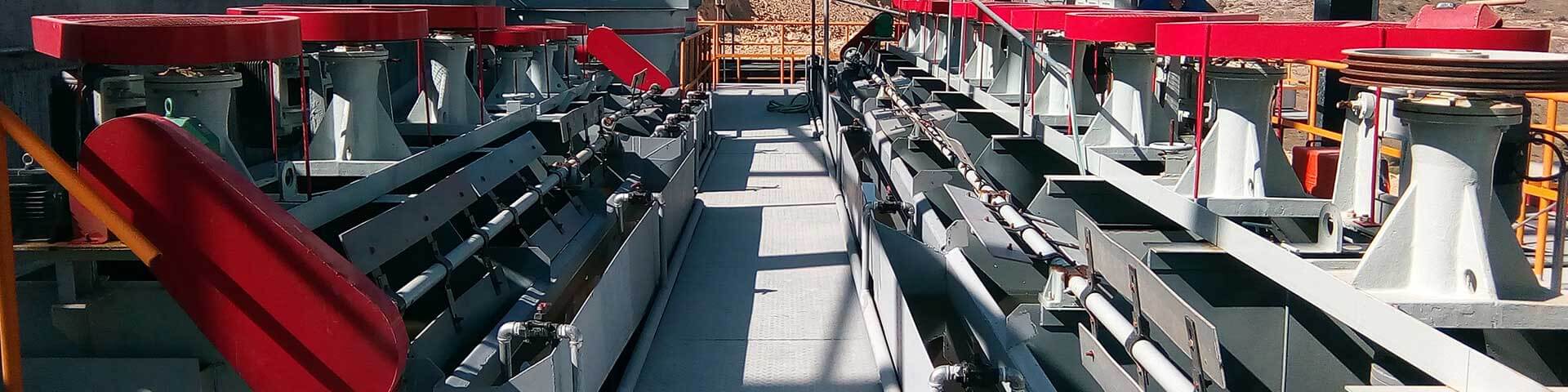
Lead and zinc are important non-ferrous metals widely used in various fields. Therefore, the rational development and processing of lead-zinc ore resources is of great significance to the development of the industrial economy. Based on different mineralization processes, lead-zinc ores can be classified into different types. In actual production, adopting appropriate beneficiation technologies can effectively improve the recovery rate and economic benefits of lead-zinc ore. The following will introduce the operations at different stages of the lead-zinc ore beneficiation process, helping you better understand the utilization pathways of lead-zinc ore and deeply grasp the core logic of the lead-zinc ore beneficiation process.Details>>
Copper-lead-zinc ores are common polymetallic mineral types and important raw materials for the non-ferrous metals industry. Their ore types are complex, often existing as sulfide ores, oxide ores, or mixed ores. Due to the close association of copper, lead, and zinc minerals and their similar floatability, effective separation is quite difficult. This article will introduce copper-lead-zinc ore separation and beneficiation technologies from multiple perspectives.Details>>
Copper-nickel ore is an important strategic mineral resource in my country. However, copper and nickel minerals often coexist closely, have similar floatability, and exhibit complex and diverse ore types. For these types of minerals, beneficiation is quite challenging. Effective separation and comprehensive utilization of copper-nickel resources have always been key points and difficulties in the beneficiation field. This article will introduce the difficulties in separating copper-nickel ore and copper-nickel beneficiation separation methods.Details>>
Zinc, as a non-ferrous metal, is widely used in galvanizing, alloy manufacturing, battery industry, and other fields. With the acceleration of global industrialization, the demand for zinc resources continues to grow, while high-quality, easily beneficiated zinc ore resources are increasingly scarce. How to select suitable beneficiation processes based on the characteristics of different types of zinc ore has become a focus of industry attention. Due to the differences in the formation conditions of zinc minerals and the mineral elements they contain, this article will provide a detailed introduction to the types of zinc ore and their beneficiation methods!Details>>
Copper-zinc ore is a common polymetallic sulfide mineral found in nature. Due to the complex symbiotic relationship and similar surface properties of copper and zinc minerals, it is a typical difficult-to-process ore in the beneficiation field. Differentiated processes are required to effectively separate different types of copper-zinc ores. This article will introduce why copper-zinc ore is so difficult to separate and introduce four copper-zinc beneficiation technologies that can be adapted to the characteristics of various copper-zinc ores to solve the separation problem.Details>>
With copper resources dwindling and rich ores becoming increasingly scarce, the reprocessing of refractory copper and tailings has become an important channel for resource recovery. Copper tailings contain various valuable components, which can be reused through appropriate reprocessing methods. This article will focus on the valuable components in copper tailings and the reprocessing of copper tailings.Details>>
Recently, copper prices have experienced a surge, attracting widespread market attention. Behind this price spike lie complex and profound reasons. Chile, a major global copper-producing region, has seen its mining transportation disrupted by severe weather, directly impacting the global copper market supply and demand. Simultaneously, the rapid development of the new energy industry has led to an explosive growth in copper demand. While demand continues to expand, traditional copper mines face the predicament of continuously declining ore grades and rising mining costs, further exacerbating market concerns about copper resource supply.Details>>
Copper is an important non-ferrous metal, and its production and sales volume are second only to aluminum. Copper metal is mainly extracted from sulfide ores, and mineral resources are relatively abundant. Oxide copper ores account for a large proportion of them, and can be roughly divided into two categories: one is the oxide copper ore with simple composition and easy to handle, which is often treated by flotation; the other is the oxide copper ore that is difficult to handle, which is mostly treated by chemical methods. Although the mineral processing index obtained by chemical treatment methods is better, chemical methods such as acid leaching have a long treatment cycle and slow recovery rate improvement, so flotation is often used as the preferred method for treating oxide copper ores. The following will elaborate on two commonly used flotation methods: direct flotation and sulfide flotation.Details>>
Copper ore enrichment is the key process to increase the copper content in copper ore to reach the economic utilization level. Common copper ore enrichment methods are mainly flotation, gravity separation, magnetic separation and leaching. Each enrichment method is different. Let's learn about it together.Details>>
Chalcopyrite (CuFeS₂) and pyrite (FeS₂) are common sulfide minerals that often coexist in ores. Among them, chalcopyrite is one of the main minerals for obtaining copper, and pyrite coexists with it, which will affect the quality of copper concentrate. In the beneficiation process of copper ore, effective separation of chalcopyrite and pyrite is crucial to improving the grade and recovery rate of copper concentrate. However, there are many similarities between the two in crystal structure, chemical composition, physical properties, etc., and separation is somewhat difficult. At present, the common chalcopyrite copper ore beneficiation and separation methods are mainly flotation, magnetic separation and gravity separation.Details>>
Copper flotation is an important mineral processing technology in the development of copper resources. Different types of copper ores have different flotation methods and technical options due to their differences in ore composition and physical properties. By reasonably adjusting crushing, grinding, slurry adjustment and the selection of flotation reagents, the recovery rate of copper minerals and the quality of concentrate can be effectively improved. The following will introduce the flotation process of copper sulfide and copper oxide, the flotation process and the selection of flotation reagents to help you better understand copper flotation.Details>>
Lead is a silvery-white metal with a slightly blue tint, which has good ductility, softness and corrosion resistance. In the market, lead is mainly used to manufacture products such as batteries, cable sheaths, lead pipes, lead plates, etc. It also plays an important role in chemical, metallurgical, and construction fields. Understanding the lead beneficiation process is of great significance for improving the recovery rate and quality of lead, meeting market demand, and realizing the sustainable use of resources. At present, the common lead ore beneficiation methods include flotation, gravity separation, and magnetic separation. Let's learn about the principles and characteristics of these lead beneficiation methods.Details>>

 Consult
 Message
