

Wechat QR code
Wechat QR code
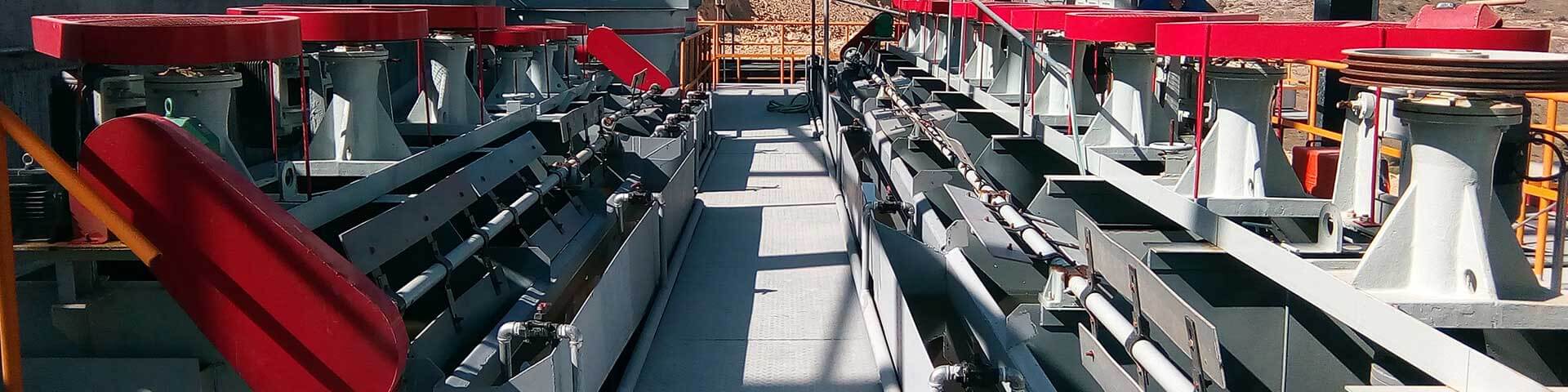
Hematite is one of the main minerals for obtaining iron resources. Due to differences in mineral properties and quality conditions, the nature of hematite varies in nature. Therefore, flotation is often used as the main process. This article will mainly introduce the hematite flotation methods.Details>>
Iron ore is a crucial raw material for the steel industry, and its quality directly impacts the performance and quality of steel products. There are many types of iron ore in nature, each with unique properties, necessitating different flotation processes for efficient separation. This article primarily introduces magnetite ore flotation methods.Details>>
With the continuous advancement of mineral processing technology, the beneficiation technology for mixed iron ore has also made significant progress. Mixed iron ore, due to its content of a certain proportion of magnetite and weakly magnetic iron ore, requires a more diversified and flexible combination of processes in its beneficiation. Currently, roasting magnetic separation, weak magnetic separation, strong magnetic separation, and flotation-gravity separation are widely used for the mixed iron ore beneficiation. These methods not only improve beneficiation efficiency but also reduce beneficiation costs to varying degrees.Details>>
Iron ore is an important raw material for industrial production, playing a vital role in driving industrial production. However, due to the depletion of rich iron ore resources, the development of complex and difficult-to-beneficiate iron ore resources has become a focus of industry. These ores exhibit polymetallic coexistence, making individual separation extremely difficult, increasing beneficiation costs, and posing a potential environmental pollution risk. Therefore, it is necessary to conduct in-depth analysis and research on beneficiation processes for different difficult-to-beneficiate iron ores to improve beneficiation indicators and resource utilization rates. This will accelerate the development and utilization of iron ore and promote the economic benefits of beneficiation plants. This article will introduce several low-grade iron ore beneficiation technologies.Details>>
Polymetallic rich iron ore is a kind of mineral resource with complex composition. Besides the main iron ore, it often contains a variety of metal minerals, including copper, zinc, lead, silver, rare earths, cobalt and nickel ores, etc. This type of iron ore is closely associated with other minerals and is a difficult-to-select type of iron ore. In addition, apart from iron which can be enriched, other valuable metals also have enrichment value. Therefore, this article will focus on introducing the beneficiation process of metal iron ore to see how it recovers iron and other metal minerals.Details>>
As an important polymetallic mineral resource, iron-rich manganese-lead-silver ore has a high development value in the industrial field. However, the resource distribution and development of this type of ore present a unique situation, and its own complexity also brings many difficulties in ore dressing. Due to the complex nature of its ore and the difficulty of ore dressing technology, the resource utilization rate is not high, and some valuable metals are seriously lost during the ore dressing process. In-depth exploration of its ore dressing technology is of great significance to improving resource utilization efficiency, meeting industrial needs and promoting the sustainable development of the mining industry. Let's analyze together, what are the difficulties in ore dressing of this type of iron-rich ore? What are the ore dressing technologies?Details>>
Chalcopyrite (CuFeS₂) and pyrite (FeS₂) are common sulfide minerals that often coexist in ores. Among them, chalcopyrite is one of the main minerals for obtaining copper, and pyrite coexists with it, which will affect the quality of copper concentrate. In the beneficiation process of copper ore, effective separation of chalcopyrite and pyrite is crucial to improving the grade and recovery rate of copper concentrate. However, there are many similarities between the two in crystal structure, chemical composition, physical properties, etc., and separation is somewhat difficult. At present, the common chalcopyrite copper ore beneficiation and separation methods are mainly flotation, magnetic separation and gravity separation.Details>>
Vanadium-titanium magnetite is a complex polymetallic ore, and its main feature is the complex and diverse mineral composition. In addition to containing a large amount of magnetite (Fe₃O₄) as the main iron mineral component, it is also accompanied by rich ilmenite (FeTiO₃) and a certain amount of vanadium. These useful minerals are usually closely symbiotic. In addition, there are a variety of gangue minerals in the ore, such as feldspar, quartz, pyroxene, olivine, etc. The embedded particle size of vanadium-titanium magnetite is uneven, ranging from coarse particles to fine particles, which makes its beneficiation difficult. This question is about the vanadium-titanium magnetite beneficiation method and process analysis!Details>>
Chromite is an important strategic metal mineral, its main components are iron, chromium and oxygen, and may also contain a small amount of magnesium, aluminum, silicon and other elements. In terms of beneficiation, it is mainly determined by the properties of chromite ore, but the general principle process is usually crushing-grinding-separation (gravity separation, magnetic separation, flotation)-dehydration. However, when chromite beneficiation is operated, what equipment is required for each process? Let's learn about it together.Details>>
Siderite is a carbonate mineral with the chemical formula FeCO₃. Siderite is usually gray, light yellow or brown, with a glassy luster. It is a weakly magnetic mineral and often coexists with other minerals. The ore structure is complex and the iron content is unstable. In terms of beneficiation methods, due to the difference in the ore properties of siderite, its beneficiation process is also different, and the siderite beneficiation equipment is also different. Let's take a look at what are the commonly used equipment for siderite beneficiation?Details>>
Rutile is a titanium-containing oxide mineral, and its chemical formula is TiO₂. Rutile is usually dark red, brown or black, with a metallic luster, and its hardness is relatively high. The crystal structure of rutile is tetragonal, and common crystal forms include columnar and needle-shaped. Rutile is mainly produced in metamorphic rocks and igneous rocks, and coexists with minerals such as ilmenite and magnetite. This article mainly introduces rutile beneficiation methods!Details>>
Phosphorus in phosphorus-containing iron ore mainly exists in the form of phosphate, and the presence of phosphorus directly affects the quality of iron ore. Therefore, dephosphorization treatment is required. At present, the common iron ore dephosphorization processes include flotation, magnetic separation, chemical leaching, oxidation roasting-magnetic separation combined method and microbial method.Details>>

 Consult
 Message
