

Wechat QR code
Wechat QR code

15311826613
Click to add WeChatFluorite, as an important non-metallic mineral resource, is widely used in chemical, metallurgical, and optical industries. Based on the different mineral compositions and associated minerals, fluorite can be divided into several types, including single-type, quartz-type, calcite-type, barite-type, and sulfide-type. Due to differences in mineral properties, each type of fluorite has its own characteristics in beneficiation. Effective beneficiation technology can not only improve the recovery rate and purity of fluorite but also reduce production costs and enhance the economic value of the ore. This article will detail the fluorite ore beneficiation methods, aiming to provide a reference for the efficient purification of fluorite ore.
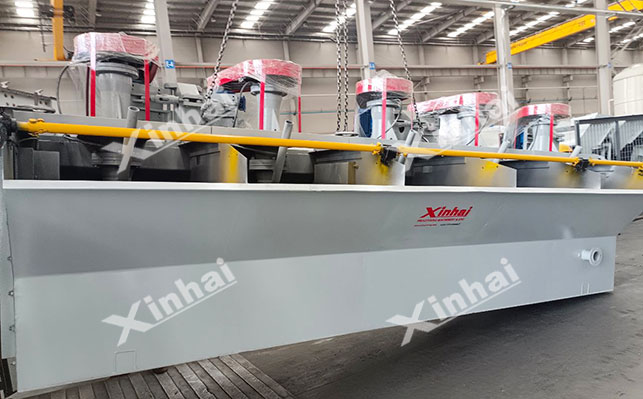
Single-type fluorite ore is mainly composed of pure fluorite minerals with fewer associated minerals. Due to the simple mineral properties, the beneficiation process is relatively simple, mainly employing physical beneficiation methods such as gravity separation or direct flotation. Gravity separation is mainly suitable for ores with larger particle sizes and significant density differences between fluorite and other gangue minerals. It uses gravity separation equipment such as vibrating screens and shaking tables to purify fluorite. Flotation is mainly used to process fluorite ores with finer particle sizes and more impurities. In the flotation process, oleic acid, a fatty acid collector, is used to collect the fluorite. Modifiers used in the flotation process include sodium carbonate and water glass, which can further improve the separation effect between fluorite and impurities.
Quartz-type fluorite ore is mainly composed of fluorite and quartz, containing small amounts of calcite, barite, and sulfides. The key to beneficiation of this type of ore is the separation of fluorite and quartz, which is generally carried out using flotation. In addition, grinding is also an important factor affecting its flotation. There are two flotation methods for quartz-type fluorite: direct flotation for fluorite ore and reverse flotation for quartz ore.
In the direct flotation of fluorite ore, a fatty acid collector is added to the pulp to selectively hydrophobize the fluorite particles, causing quartz particles to float to the surface with the bubbles, while the quartz particles remain suppressed in the pulp. In reverse flotation of quartz ore, a depressant is first used to suppress the fluorite, allowing the quartz to float first. Regardless of the flotation method chosen, the dosage of beneficiation reagents and the pH value of the pulp must be optimized according to the ore properties to improve the recovery rate of fluorite ore and the grade of the concentrate.
The main associated mineral in this type of fluorite ore is calcite, with a small amount of quartz also present. Since both fluorite and calcite are calcium-containing minerals with similar chemical properties, beneficiation can be challenging. However, by adjusting the pulp pH and adding depressants to suppress the flotation of calcite, the fluorite ore can be effectively floated. Depressants used in calcite-type fluorite ore mainly include water glass, sodium hexametaphosphate, lignin sulfonate, dextrin, tannins, and tannin extract. Meanwhile, oleic acid and other fatty acid collectors are added during fluorite ore flotation to accelerate the process.
fluorite ore contains more than 10% barite and is often associated with sulfide minerals such as pyrite, galena, and sphalerite. The floatability of barite is similar to that of fluorite, making their separation difficult. For this type of ore, mixed flotation is generally used. Sodium carbonate is added to the pulp to adjust the pH, and oleic acid and water glass are used as collectors to obtain a mixed concentrate of fluorite and barite. This mixed concentrate is then further separated by flotation. During the separation process, by adjusting the dosage and type of flotation reagents, fluorite and barite can be effectively separated while ensuring the purity and recovery rate of both concentrates.
5. Sulfide-type Fluorite Ore Beneficiation
Sulfide-type fluorite minerals have a high content of metallic sulfides, with lead and zinc content sometimes reaching industrial grades. Therefore, when processing this type of fluorite, the recovery of other metallic minerals must also be considered. The processing of this type of ore first uses a sulfide mineral collector to preferentially separate the metallic sulfide minerals, and then uses a fatty acid collector to recover fluorite from the flotation tailings. For the beneficiation of sulfide-type fluorite ores, a roasting-leaching process can also be used to extract valuable metals and decompose the fluorite minerals.
The above is a brief introduction to the beneficiation methods and reagents for five types of fluorite ores. Currently, the commonly used methods for fluorite ore purification are hand sorting, gravity separation, and flotation, with flotation being the most common method. By designing a reasonable process flow and selecting beneficiation equipment based on the properties of the fluorite ore and the beneficiation requirements, the utilization rate of various elements in the fluorite ore can be greatly improved.
 CHAT
CHAT MESSAGE

 Consult
 Message
