

Wechat QR code
Wechat QR code

15311826613
Click to add WeChatPhosphate ore is a strategic non-renewable resource for ensuring food security and industrial development, used in agriculture, industry, and new materials. Global demand is rising, but phosphate ore is mostly low-grade and complex, with many impurities. Efficiently obtaining high-grade phosphate ore relies on beneficiation, with flotation being the primary method. The following introduces common phosphate ore flotation methods and the selection of flotation methods for different types of phosphate ore.
Depending on the type of phosphate ore, the characteristics of impurities, and the separation target, various mature flotation methods have been developed in industry. These can be divided into several categories: direct flotation, reverse flotation, combined direct and reverse flotation, and double reverse flotation. Each method has its own characteristics in reagent selection and process design.
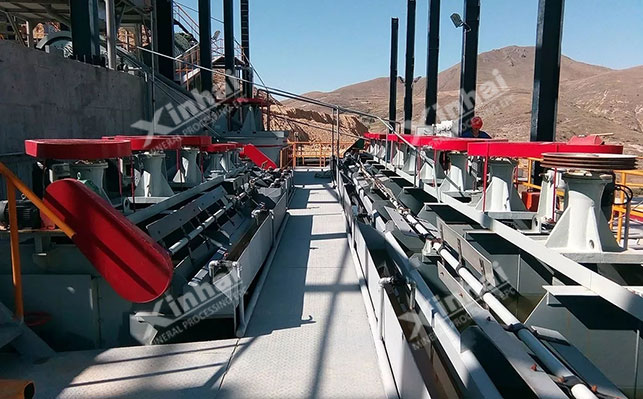
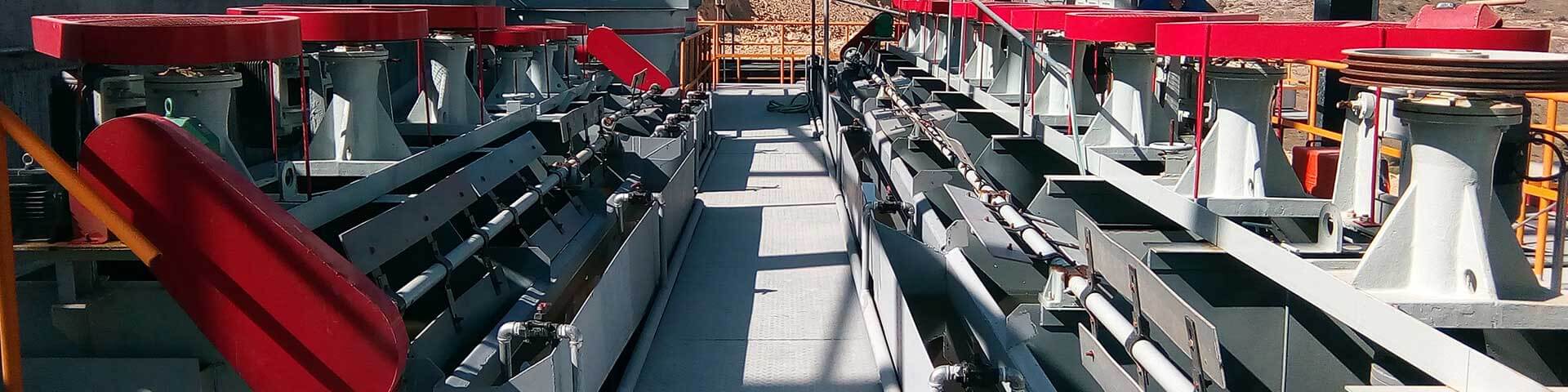
The principle of direct flotation is that in a suitable slurry environment, the collector preferentially adsorbs the surface of phosphate minerals, causing them to adhere to bubbles and float to the surface of the slurry as concentrate, while impurities remain in the slurry as tailings. In terms of reagent formulation, direct flotation requires a pH range of 9-11, an alkaline range. Sodium carbonate is commonly used as a pH adjuster and slime dispersant, water glass as a quartz depressant, and fatty acid-based collectors. A primary roughing and secondary cleaning flotation process is often employed for phosphate rock flotation.
In contrast to direct flotation, reverse flotation uses reagents to preferentially remove impurities from the minerals, while the phosphate minerals remain in the pulp as concentrate.
The key to reverse flotation is creating an acidic pulp environment, with a pH range of 5-6. Sulfuric acid is commonly used as a pH adjuster, both regulating acidity and inhibiting the surface activity of apatite. Phosphate-based reagents are used to enhance the inhibition of phosphate minerals, and amine-based collectors are often chosen. A typical process is: roughing and impurity removal + primary cleaning.
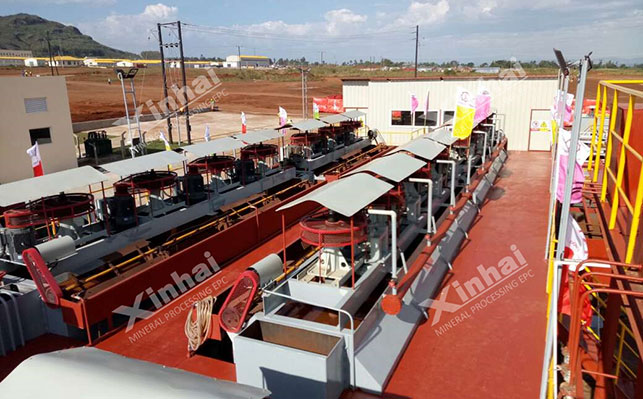
The combined direct and reverse flotation method is a combined process developed for phosphate rock with a complex mixture of silicon and magnesium impurities. It achieves the stepwise removal of both impurities through a combination of direct flotation followed by reverse flotation or vice versa.
Direct Flotation Followed by Reverse Flotation: Under alkaline conditions, a mixed concentrate of phosphate minerals and dolomite is floated, removing most of the quartz impurities. Then, the mixed concentrate undergoes reverse flotation under acidic conditions to float the dolomite, ultimately yielding a high-grade phosphate concentrate.
Reverse Flotation Followed by Direct Flotation: Dolomite is first removed by reverse flotation under acidic conditions, followed by direct flotation under alkaline conditions to recover the phosphate minerals and remove quartz. This method requires careful control of the reagent matching between the two flotation stages.
The double reverse flotation method removes siliceous and carbonate impurities from phosphate rock through two separate reverse flotation processes. Phosphate minerals are retained as sediment throughout the process and do not require further flotation recovery. The process consists of two key stages:
Stage 1: Alkaline reverse flotation for desilication. The pulp pH is controlled at 10-11. Amine collectors are used to float quartz, and water glass is used as an activator for siliceous minerals.
Stage 2: Acidic reverse flotation for magnesium removal. The pH of the desilication-treated pulp is adjusted to 5-6. Fatty acid collectors are used to float dolomite, and phosphoric acid is used as a depressant for phosphate minerals.
The above is an introduction to phosphate rock flotation methods. In actual concentrators, the determination of the phosphate rock flotation method requires comprehensive consideration of the ore properties, local policies, and geographical location. It is recommended to conduct concentrator tests and analyze the data to tailor a phosphate rock flotation process scheme that suits the specific circumstances.
 CHAT
CHAT MESSAGE

 Consult
 Message
