

Wechat QR code
Wechat QR code

15311826613
Click to add WeChatGraphite is an important non-metallic material widely used in lubricants, refractory materials, batteries, casting, pencils, coatings, and other fields. The properties of raw graphite ore vary considerably, often containing impurities such as quartz, illite, kaolinite, andalusite, sericite, and small amounts of pyrite, limonite, tourmaline, and calcite. These impurities require purification before use. Common graphite beneficiation and purification methods include flotation, gravity separation, electrostatic separation, and selective flocculation. Alkali-acid methods, acid leaching, chlorination roasting, and high-temperature roasting are mostly used for the deep processing of graphite concentrates.
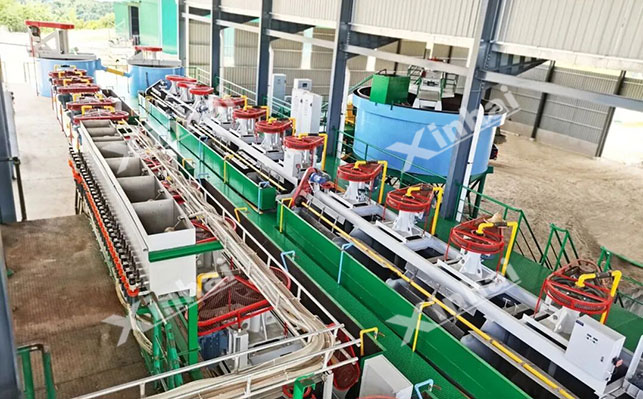
Graphite possesses excellent natural floatability and hydrophobicity. By adding flotation reagents, graphite is enriched at the gas-liquid interface, achieving separation from impurity minerals. Commonly used collectors are coal tar, frothers are often pine oil or butyl ether oil, and depressants are often water glass and sodium fluorosilicate. For flake graphite, a multi-stage grinding, multiple beneficiation, and regrinding and re-beneficiation process is often used to protect the flake structure. Flotation can achieve graphite grades of 80%~90%, or even around 95%, with relatively low reagent consumption, energy consumption, and cost. However, for graphite ore containing extremely fine silicate minerals and compounds of elements such as potassium, calcium, sodium, magnesium, and aluminum, it is difficult to achieve individual liberation during the grinding stage. Further purification using other processes after flotation is necessary.
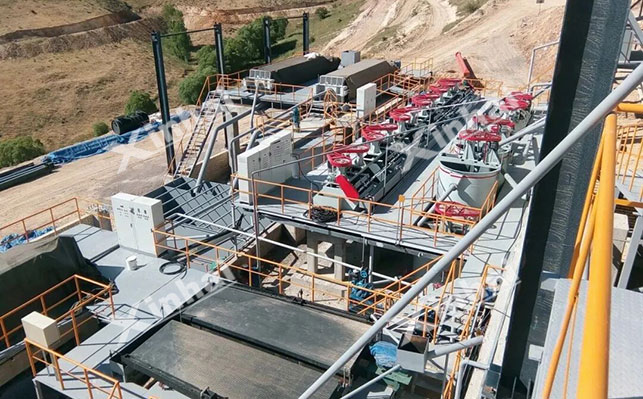
Gravity separation separates graphite ore from gangue based on the difference in specific gravity.
Graphite-associated minerals can be classified into heavy minerals (specific gravity > 3.32, such as pyrite, pyrrhotite, limonite, zoisite, etc.), medium-weight minerals (2.9~3.32, such as diopside, tremolite, apatite, etc.), and light minerals (specific gravity < 2.9). Due to the specific gravity difference between graphite and its associated minerals, gravity separation can be used to remove the heavy minerals, yielding a rough concentrate primarily composed of graphite.
Electrostatic separation utilizes the difference in conductivity between minerals for separation. Graphite has good conductivity, while gangue minerals such as feldspar, quartz, and pyrite have poor conductivity; electrostatic separation can effectively separate the two. The applicable particle size is generally 0.1–2 mm, but the upper limit for processing flaky or low-density graphite ore can reach 5 mm, and wet high-gradient electrostatic separators can process down to the micron level.
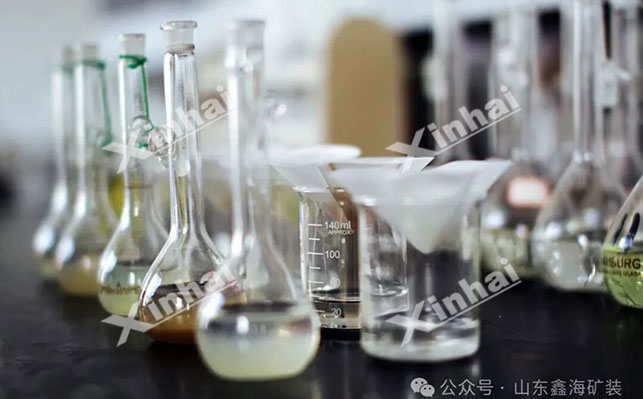
Selective flocculation involves adding a polymeric flocculant to a suspension containing two or more components. The flocculant selectively adsorbs a specific component from the suspension, causing flocculation and precipitation through bridging, thus achieving component separation.
In production practice, commonly used flocculants include sodium silicate, sodium hexametaphosphate, lignin starch, and carboxymethyl cellulose, with water glass being the primary dispersant. This method features simple equipment and low cost, but the fixed carbon recovery rate is relatively low, only about 40%.
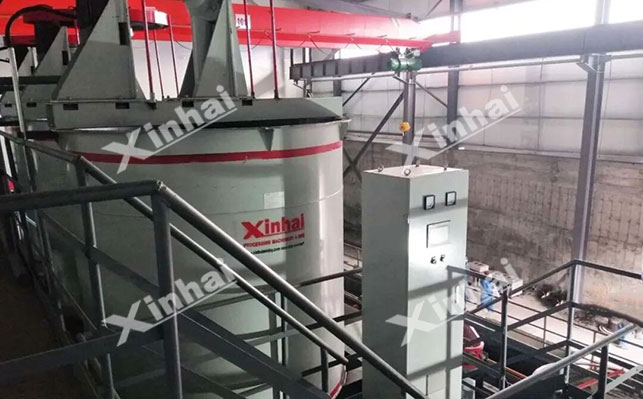
The alkali-acid method for purifying graphite ore can be divided into two processes: alkali fusion and acid leaching.
Alkali fusion process:Under high temperature conditions, the molten alkali reacts with acidic impurities (silicates, aluminosilicates, quartz) in the graphite to form soluble salts, which are then removed by washing.
Acid leaching process: Acid reacts with metal oxide impurities, converting some unreacted impurities from the alkali leaching process into soluble salts. These salts are then removed by washing to separate them from the graphite, thus improving graphite purity.
The alkali-acid method for purifying graphite ore can achieve a graphite grade of 99.5%, with simple equipment, low energy consumption, and low initial investment. However, acids and alkalis are highly corrosive to the equipment, resulting in severe wastewater pollution and graphite loss.
The chlorination roasting method involves adding a suitable reducing agent to graphite ore under specific atmosphere and equipment, followed by high-temperature roasting. This causes valuable metals to combine with chlorine, transforming into low-melting-point and boiling-point gaseous or condensed-phase metal chlorides, which precipitate and effectively separate from other components, yielding high-purity graphite. This method is highly efficient, energy-saving, and low-cost, but chlorine gas is highly corrosive and toxic, posing a significant environmental hazard.
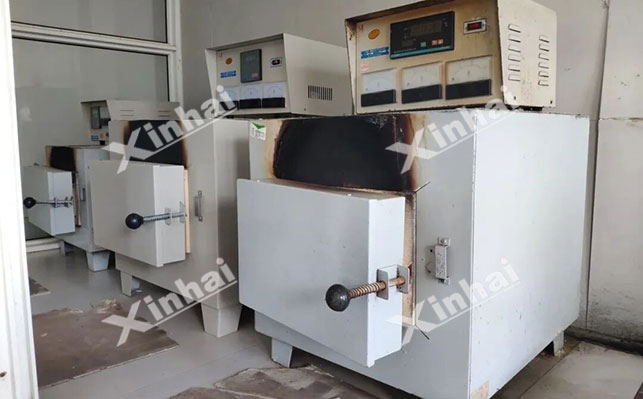
Graphite ore has a very high melting point (3652℃, boiling point 4250℃), far exceeding that of most impurity minerals. The high-temperature roasting method utilizes the difference in melting points between graphite and other impurity minerals for separation. Heating the graphite ore to 2700~3000℃ causes most impurities to vaporize and separate, thereby obtaining graphite with a grade as high as 99.99% or even higher. However, this method is energy-intensive, requires sophisticated equipment, and has certain requirements regarding the purity of the raw ore.
In actual production, a comprehensive analysis of the mineral composition and properties of graphite ore should be conducted through beneficiation tests. A reasonable purification plan should be formulated based on the characteristics of the ore, and beneficiation processes and equipment should be scientifically selected to improve beneficiation efficiency while reducing resource waste, achieving a dual optimization of economic efficiency and resource utilization.
 CHAT
CHAT MESSAGE

 Consult
 Message
