

Wechat QR code
Wechat QR code

15311826613
Click to add WeChatAntimony, as an important strategic metal, is widely used in many key areas such as flame retardants, batteries, semiconductors, and alloy materials. With the increasing scarcity of antimony resources and the continuous development of metallurgical technology, the scientific and effective beneficiation of antimony ore has become a crucial link in achieving sustainable resource utilization. Currently, the main methods for antimony ore beneficiation include gravity separation and flotation; the specific method should be determined comprehensively based on the ore properties and economic and technical conditions.
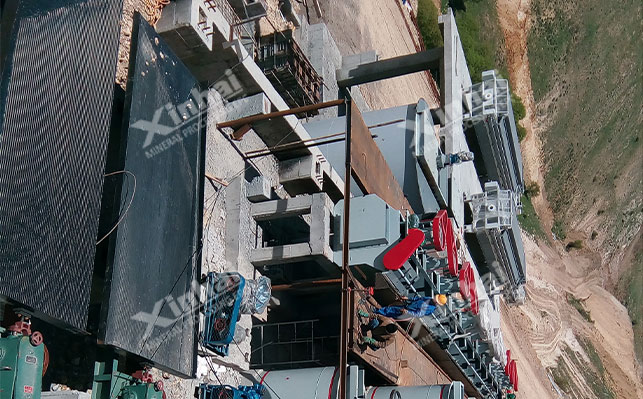
Gravity separation of antimony ore utilizes the density difference between antimony minerals (density 4.5–4.6 g/cm³) and gangue (density 2.5–3.0 g/cm³). Using equipment such as jigs, sluices, and shaking tables, coarse-grained (generally >0.5 mm) antimony minerals are separated from the gangue. Gravity separation is applicable to most types of antimony ore, including stibnite, yellow antimony travertine, red antimony, and antimony travertine, as well as difficult-to-process antimony sulfide and antimony oxide. However, water-soluble antimony calcium ore is difficult to separate due to its density being similar to that of gangue. Gravity separation is widely used in antimony ore beneficiation because it requires less investment, has a simpler process, and can recover qualified concentrate at the coarse-grained level, often serving as a pre-selection step before flotation.
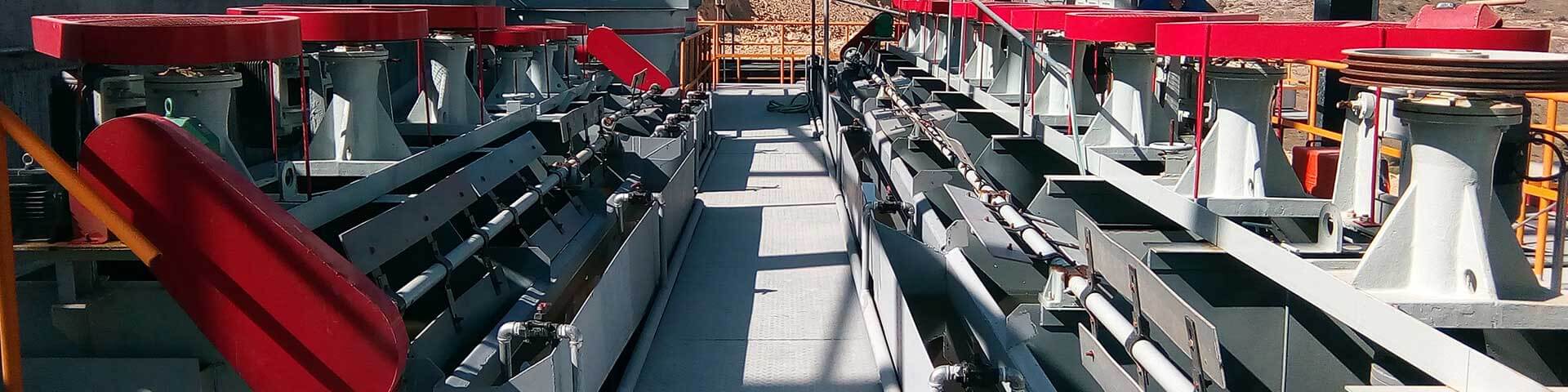
Antimony ore flotation utilizes the hydrophobicity of the antimony ore particles themselves or induced by reagents to achieve mineral aggregation and separation at the liquid-gas or water-oil interface. Flotation is suitable for antimony sulfide ores, mixed antimony sulfide-oxide ores, stibnite, and various polymetallic sulfide ores.
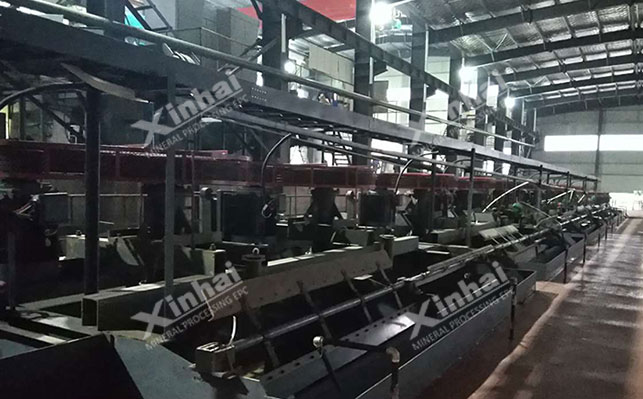
For stibnite, lead salts are commonly used as activators, and copper salts can also be used in combination. Collectors such as butyl xanthate, shale oil, and a mixture of ethyl thiocyanate are added. Frothing agents often use pine oil or No. 2 oil. Lime and sodium carbonate are used to adjust the pH of the pulp. The pulp, after reagent treatment, enters the flotation cell, where mineralized froth is formed under aeration and agitation, enriching the surface. After collection by scraper, dewatering, and drying, antimony concentrate is obtained. Commonly used flotation methods include: single flotation and gravity-flotation combined methods.
Single-flotation method for antimony ore: This method can separate single stibnite ore.
Combined gravity-flotation method: This method is suitable for processing antimony minerals with uneven particle size.
In actual production, beneficiation tests should be conducted first to gain a thorough understanding of the ore type, mineral composition, ore structure, and the physicochemical properties of the minerals, including their texture and embedding characteristics, and to scientifically and rationally select the beneficiation process. Simultaneously, a beneficiation process suitable for the actual conditions of the mine should be developed, taking into account the content of valuable components in the ore and the overall economic benefits. A scientific beneficiation process can not only effectively improve the recovery rate of antimony minerals but also achieve the comprehensive recovery of associated valuable elements, reduce environmental impact, and promote the efficient utilization of resources.
 CHAT
CHAT MESSAGE

 Consult
 Message
